
 By: Joe Dyken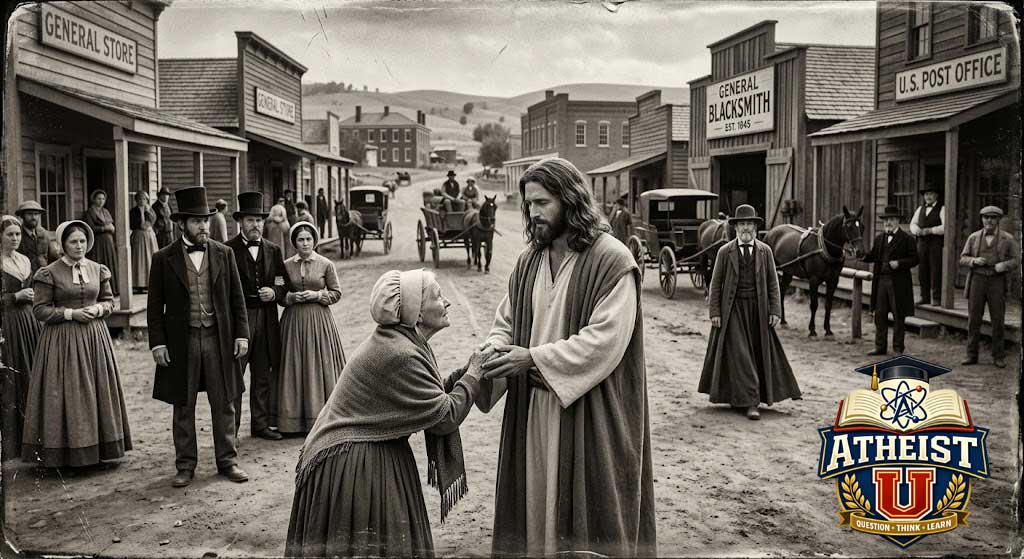
The belief that Jesus Christ visited the Americas comes primarily from the Book of Mormon, especially the book of 3 Nephi. In that text, the resurrected Jesus appears to a group of people in the Americas, shows them the wounds from his crucifixion, teaches doctrines similar to those found in the New Testament, performs miracles, chooses disciples, and establishes his church among them. For members of The Church of Jesus Christ of Latter-day Saints, this is treated as sacred history and is connected to Jesus’ statement in John 10:16 about having “other sheep” who are not of the Jerusalem fold.
From a historical perspective, however, the claim faces a major problem: there is no independent evidence confirming that such a visit occurred. The document notes that there are no Roman, Jewish, early Christian, or Indigenous American records that describe Jesus appearing in the Americas. There are also no confirmed archaeological sites for key Book of Mormon locations such as Zarahemla or Bountiful, and no artifacts or inscriptions that clearly connect ancient American civilizations to the specific Israelite-Christian world described in the Book of Mormon.
Mainstream archaeologists have not found support for the large civilizations, battles, cities, technologies, or religious practices described in the Book of Mormon. It specifically mentions disputed or anachronistic items such as steel, chariots, horses, elephants, wheat, and other Old World features that do not fit the conventional historical record for pre-Columbian America. It should be noted that genetic studies connect Indigenous American ancestry primarily to ancient migrations from Asia, not to large migrations from the ancient Near East. Linguistically, scholars have not found clear Hebrew or Egyptian roots in Indigenous American languages that would support the Book of Mormon’s described record-keeping tradition.
LDS scholars and apologists offer arguments in favor of Book of Mormon historicity. These include internal literary features, possible ancient writing patterns, Old World parallels, and claims of limited archaeological support. However, the document frames these as insufficient by the normal standards historians use to verify ancient events. In other words, they may support belief for people already approaching the text as scripture, but they do not establish the event as historically verified.
So the most balanced conclusion is this: as a matter of Latter-day Saint faith, Jesus Christ visited the Americas after his resurrection. As a matter of mainstream history and archaeology, there is no verified evidence that Jesus visited North America or the broader Americas. The claim is best understood as a religious belief rooted in the Book of Mormon, not as an event confirmed by independent historical evidence.
Agree? Disagree?

